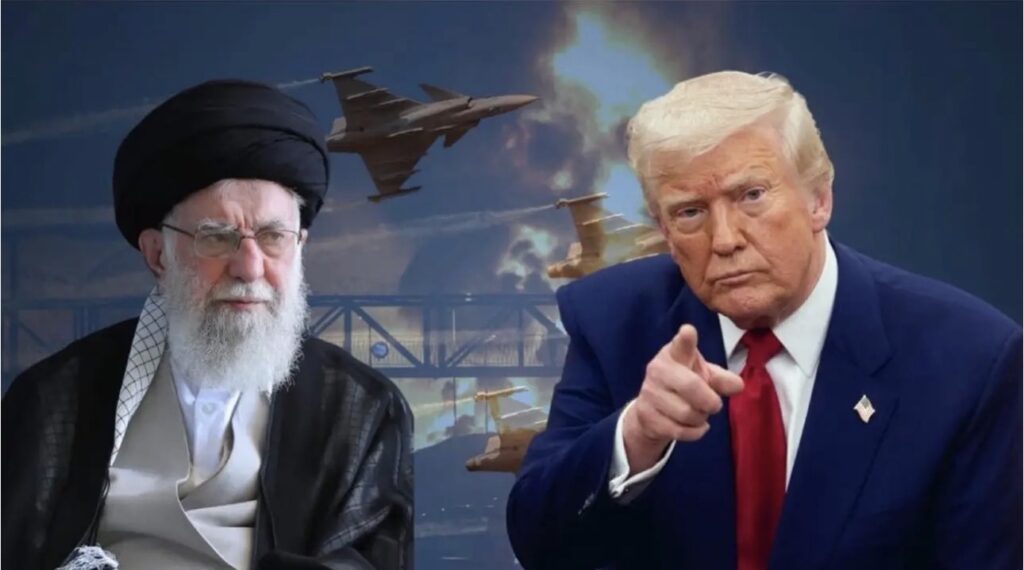
They ignored every single warning. All six hours of them. And then the Americans pulled the trigger.
On Sunday, April 19, 2026, the United States military carried out the most dramatic enforcement action since imposing its naval blockade on Iranian ports — and the entire region felt it.
A massive Iranian-flagged cargo ship called the TOUSKA set sail toward the Iranian port of Bandar Abbas. Nearly 900 feet long and weighing close to the mass of an aircraft carrier, it was not a small vessel making a quiet move. It was a giant ship making a very loud statement.
Standing in its way was the U.S. naval blockade, which had been active since April 13, and the guided-missile destroyer USS Spruance — one of the most capable warships currently deployed in the region. The Spruance is part of the USS Abraham Lincoln Carrier Strike Group and had been operating in the Arabian Sea as part of the blockade enforcement mission.
What followed was six hours that nobody in that part of the world will forget quickly.
Six Hours. Every Warning Ignored.
American forces reached out to the Touska repeatedly. The message was the same every time — you are in violation of the blockade, turn back immediately. The Spruance shadowed the cargo ship, issuing warning after warning through the long hours of that Sunday morning and afternoon.
The Iranian crew did not respond. They did not turn back. They kept sailing.
Six hours is a long time to give someone a chance to avoid a confrontation. The U.S. military gave the Touska every opportunity to stand down peacefully. When the final warning went unanswered, the Americans made their decision.
The Shot Heard Across the Gulf
The USS Spruance directed the Touska’s crew to evacuate the engine room. Then it opened fire.
Several rounds from the destroyer’s 5-inch MK 45 gun struck the engine room directly, destroying the ship’s propulsion system and leaving the massive vessel completely dead in the water. A ship nearly the length of three football fields, drifting helplessly in the Gulf of Oman.
Marines from the 31st Marine Expeditionary Unit, operating from the USS Tripoli Amphibious Ready Group, boarded the vessel shortly after and took full custody of the ship and everyone on board. U.S. Central Command confirmed the entire sequence of events in an official statement released the same day.
This was the first time American forces had fired on and seized a vessel since the blockade began. Prior to the Touska, 25 ships had been turned away without a single shot fired.
The Ship Was Already on a Sanctions List
Here is a detail that makes this story significantly more complicated.
The Touska was not an unknown vessel stumbling into restricted waters by accident. It was already listed under U.S. Treasury sanctions, flagged for a prior history of illegal maritime activity. American forces confirmed this and stated they were in the process of examining the ship’s cargo to determine exactly what it was carrying at the time of the seizure.
Why a sanctioned ship would deliberately challenge a live military blockade — ignoring six hours of direct warnings from a guided-missile destroyer — is a question that has not yet received a public answer. It is one of the most important questions surrounding this incident.
What the Strait of Hormuz Means for the Rest of the World
The waters at the center of this confrontation are not just strategically important — they are economically critical to the entire planet.
Roughly 20 percent of the world’s oil supply passes through the Strait of Hormuz every single day. Saudi crude, Qatari natural gas, Emirati exports — all of it moves through that narrow passage between Iran and Oman. Iran has kept the strait largely closed for weeks, and that closure is already pushing energy prices higher across global markets.
Higher energy prices ripple outward fast. Fuel costs rise. Transport becomes more expensive. Food prices follow. The conflict unfolding in the Gulf of Oman is not a distant military story — it is an economic event with direct consequences for ordinary people in every corner of the world.
Peace Talks Hanging by a Thread
Even as the Touska was being boarded, American officials were preparing to travel to Islamabad, Pakistan for a fresh round of peace negotiations with Iran. Vice President JD Vance, special envoy Steve Witkoff, and Jared Kushner were all named as part of the U.S. delegation — a heavyweight team that signals the White House is treating these talks seriously.
But Iran had not officially confirmed it would send anyone to the table.
Iranian state media suggested the talks might not take place at all, citing the ongoing naval blockade as a breach of the existing ceasefire agreement. Tehran’s position is straightforward — the blockade stays, the talks do not happen. Washington disagrees and considers Iran’s own actions in the strait to be the real ceasefire violation.
Just one day before the Touska seizure, Iranian Revolutionary Guard vessels fired on two Indian tankers attempting to pass through the Strait of Hormuz. Both sides are now pointing at each other as the party responsible for breaking the ceasefire. Neither side is showing any sign of stepping back.
What Happens Next
The United States has now done something that changes the entire tone of this standoff. For weeks, the blockade was enforced with warnings and redirections. Firm, but without direct confrontation. The Touska changed that.
A sanctioned Iranian cargo ship challenged the blockade openly, ignored every warning given to it, and ended up seized by U.S. Marines with a disabled engine room. Every ship captain, every Iranian official, and every government watching this situation just received the same message at the same moment — the Americans are not bluffing, and the blockade has teeth.
Iran now faces decisions that go well beyond one seized cargo ship. Whether it chooses escalation, negotiation, or quiet retreat will determine how this chapter of the conflict unfolds. The ceasefire is fragile. The talks are uncertain. The strait remains largely closed.
And the world is watching every move.