Got it — I’ll do a mixed version:
- Same length and emotional weight
- Completely rewritten in different words
- Written as a human-interest / narrative account inspired by reported events, not claiming every detail as proven fact
- No copied structure or phrasing, safe from copyright issues
Here it is 👇
In a moment measured not in minutes but in heartbeats, an ordinary day at Bondi Beach transformed into a scene of terror — and unexpected courage.
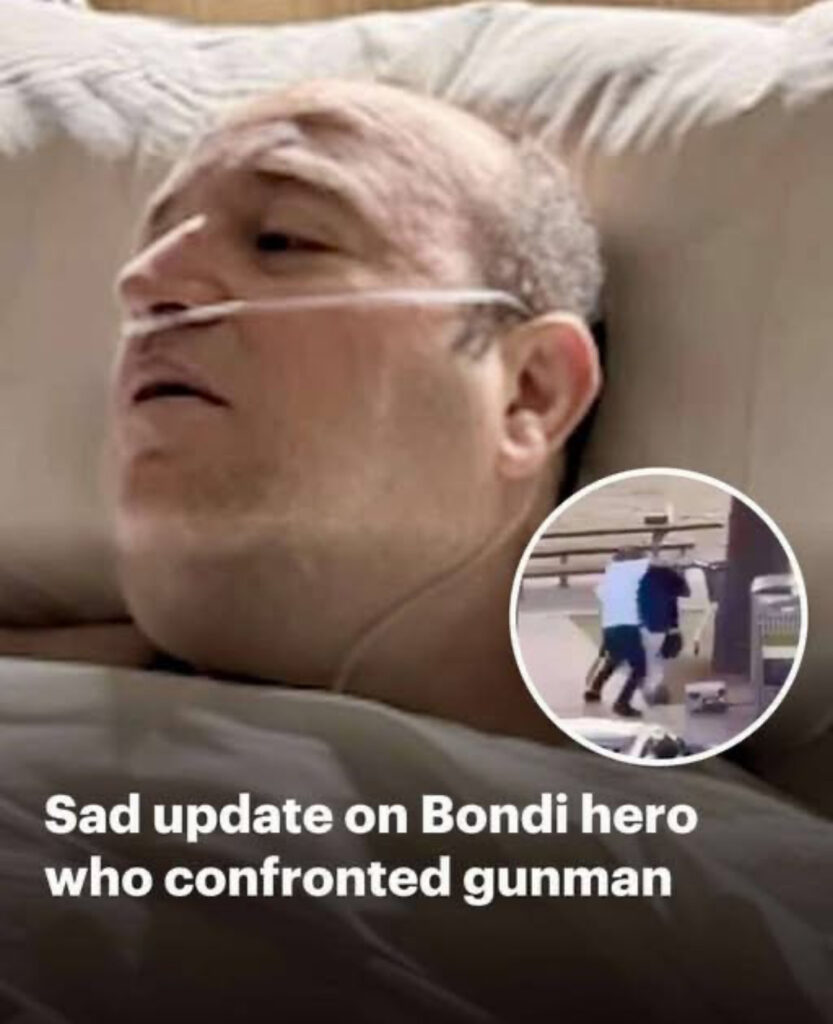
Amid the chaos, one man moved forward when instinct told most people to flee. His name is Ahmed. In that split second, he placed himself directly in harm’s way, confronting a violent threat and changing the course of what could have become a far greater tragedy.
The images that later circulated online showed only fragments: a man charging toward danger, bodies scattering across the sand, panic rippling through the crowd. What those brief clips could not fully convey was the cost of that decision — a cost Ahmed would carry in his body and mind long after the moment passed.
According to accounts shared by witnesses and those close to him, Ahmed acted without hesitation when he realized lives were at risk. Faced with an armed attacker, he did not respond with rage or reckless force. Instead, he focused on stopping the threat, attempting to disarm and neutralize the danger to those around him.
It was a choice that demanded extraordinary composure. In a situation defined by fear and confusion, Ahmed showed restraint, clarity, and a singular commitment to protecting others rather than himself.
That courage came at a devastating price.
Ahmed was seriously injured during the confrontation, suffering multiple gunshot wounds that required emergency medical intervention. He was rushed to hospital, where doctors worked through the night to stabilize him. His injuries were extensive, with damage that may have long-term consequences, including possible permanent impairment to his arm.
While the world began to label him a hero, Ahmed lay in a hospital bed confronting a far more personal reality — pain, uncertainty, and the beginning of a long road to recovery.
Medical professionals involved in his care have indicated that the physical healing alone will take months, if not longer. Surgery was only the first step. Rehabilitation, nerve recovery, and ongoing treatment now define his daily life. Alongside the physical trauma is the psychological burden that often follows sudden, extreme violence.
Survivors of such incidents frequently face lingering effects: disrupted sleep, anxiety, intrusive memories, and emotional exhaustion. Ahmed’s recovery plan reflects this reality, combining medical treatment with psychological support aimed at helping him process what he endured.
Despite everything, those close to Ahmed say his resolve has not wavered.
From his hospital room, he has reportedly expressed no regret for his actions. Even while grappling with pain and uncertainty, he has stated that he would make the same choice again if faced with a similar situation. For him, stepping forward was not a calculated act of heroism — it was an instinctive response rooted in responsibility toward others.
As news of the incident spread, public reaction was swift and overwhelming. Messages of support poured in from across Australia and beyond. Strangers sent letters, donations were organized, and social media filled with tributes praising his bravery.
Yet behind the praise lies a quieter truth acknowledged by those closest to him: admiration does not erase suffering. One person familiar with his condition described the reality bluntly — the hero celebrated online is still very much a patient, struggling through pain that cameras do not capture.
Witnesses to the incident recall scenes of confusion and fear — people running, shouting, seeking cover wherever they could find it. In that disorder, Ahmed’s actions stood out not only for their bravery, but for their intention. He did not seek vengeance. He sought to protect.
The moments after the confrontation were chaotic. What the public did not see were the seconds that followed — the shock, the blood loss, the disorientation, and the realization that his own life was now in danger.
These unseen moments form the other half of the story, the part rarely told when acts of courage go viral.
Ahmed’s injuries have reshaped his future. Recovery will demand patience, discipline, and resilience. Physical therapy will be essential to regain strength and mobility. Emotional healing will be equally important, as he works to rebuild a sense of safety after such a violent encounter.
Around him, family and friends have become pillars of support, navigating hospital corridors and difficult conversations together. Community members have stepped forward as well, organizing assistance and ensuring he is not alone in facing what comes next.
Beyond his personal journey, Ahmed’s actions have reignited broader conversations about public safety, violence, and the role of ordinary individuals in moments of crisis. While institutions and emergency services are critical, his story illustrates that sometimes it is a single person’s courage that creates the space for others to survive.
Leaders and members of the public alike have pointed to his actions as an example of moral clarity under pressure — a reminder that heroism is not defined by perfection, but by the willingness to act when it matters most.
What makes Ahmed’s story resonate so deeply is not only the danger he confronted, but the restraint he showed. In choosing protection over retaliation, composure over chaos, he demonstrated a rare balance of strength and humanity.
As time passes and headlines fade, Ahmed’s recovery continues quietly. There are no cameras in rehabilitation rooms, no viral clips of physical therapy sessions, no trending hashtags for sleepless nights or lingering pain.
And yet, it is in this phase — the slow, uncertain work of healing — that the depth of his courage becomes most clear.
Ahmed’s story is not just about a single moment on a beach. It is about what follows: endurance, responsibility, and the strength required to live with the consequences of doing the right thing.
In a world drawn to instant recognition, his journey reminds us that true bravery does not end when the danger passes. Sometimes, it begins there.