The strained relationship between Donald Trump and the American press reached another flashpoint after the former president publicly insulted CNN’s Kaitlan Collins, prompting swift pushback from the journalist and renewed scrutiny of his treatment of women covering politics.
For years, Trump has framed the media as an adversary, dismissing unflattering reports as false and accusing journalists of bias. His rivalry with major outlets was a defining feature of his presidency and remains central to his political identity. Yet the tone of his more recent confrontations has raised broader concerns, particularly as his insults increasingly target female reporters.
A Longstanding Clash With the Press
Trump’s hostile stance toward journalists has been widely covered. He frequently undermined traditional news organizations, questioned their credibility, and encouraged supporters to view factual reporting through a partisan lens. Critics argue this approach weakened public trust in journalism. His backers maintain he simply challenged institutions that had gone unchecked for decades.
What alarms media observers today is the tenor of his newest comments. Although he has never shied away from combative language, the consistent pattern of singling out women has become a focal point of debate. Several advocacy groups point to years of research showing that female reporters already face disproportionate harassment, making Trump’s rhetoric especially damaging.
Recent Escalations
The latest episode unfolded after weeks of rising tensions. In one exchange last month, Trump drew condemnation for telling a Bloomberg reporter to “be quiet, piggy” when she questioned him about matters tied to the Epstein case. The remark spread quickly online and was cited by journalists and civil-rights advocates as an example of demeaning, gendered language from a political leader.
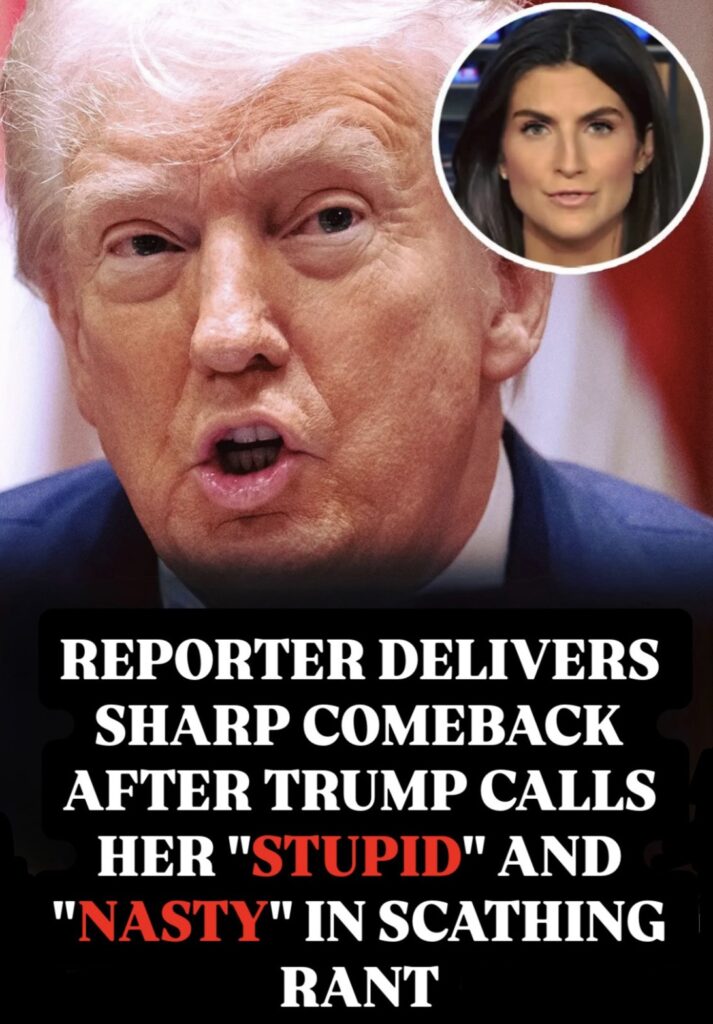
Soon after, Trump attacked a CNN correspondent during a public appearance, labeling her “nasty” and “stupid.” Clips circulated widely on social media, adding fuel to ongoing discussions about his conduct toward women. Supporters defended him by arguing he critiques performance, not gender, while detractors pointed to a habit of directing insults at women who challenge him.
The Kaitlan Collins Confrontation
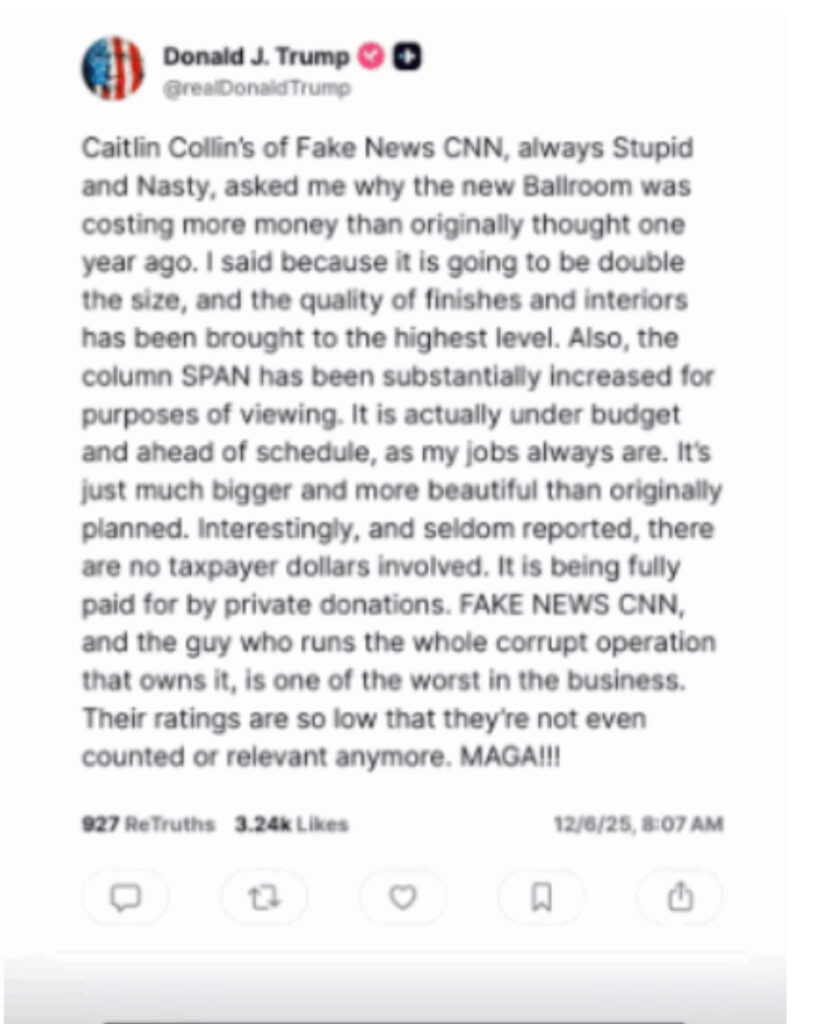
The most prominent flashpoint came when Kaitlan Collins questioned Trump about developments in Venezuela during a press event. Rather than answer, Trump abruptly cut her off and asked, “Are you stupid? Are you a stupid person?” He later expanded the attack on his social-media platform, miswriting her name and branding her “Stupid and Nasty,” repeating familiar criticism of CNN as a “fake news” outlet.
CNN responded promptly, describing Collins as a respected journalist whose reporting is trusted around the world. Collins also posted a factual clarification, noting that her question had been about an escalating crisis in Venezuela that resulted in dozens of deaths, not about the White House renovations Trump referenced in his online posts. Her steady response stood in contrast to Trump’s escalating language.
Insults Spread to Other Public Figures
The clashes haven’t been limited to journalists. Over Thanksgiving week, Trump used his social-media account to aim derogatory remarks at political rivals. He referred to Minnesota Governor Tim Walz using language widely condemned as ableist, and he attacked Representative Ilhan Omar with an Islamophobic post referencing her hijab. The comments drew heavy criticism from rights groups and lawmakers who said the remarks stoked division.
Trump also lashed out at The New York Times after it published a report questioning his stamina and describing signs of fatigue. He called the paper’s staff “creeps” and denied the characterization, insisting he had “never worked so hard.” The Times defended its reporting and noted that name-calling has become a routine part of the former president’s responses to scrutiny.
The Gender Debate
The White House continues to insist that Trump’s recent language has nothing to do with gender. Officials argue his remarks reflect frustration with what he sees as slanted coverage and that he speaks plainly to the public. His critics disagree and point to a pattern in which women journalists receive more aggressive and personal insults than their male counterparts.
Studies by media-freedom organizations and academic institutions show that women in the press endure higher levels of online abuse, including misogynistic insults and threats. Advocates say that when a political figure uses demeaning language, it not only normalizes harassment but may discourage young women from entering the field.
A Break From Past Presidential Norms
Historically, presidents criticized reporters but rarely engaged in open personal attacks. Trump’s approach marks a sharp break from that tradition. Social-media platforms have amplified his commentary, allowing him to bypass press intermediaries and communicate directly with millions of followers. This unfiltered access gives his comments enormous reach and accelerates the speed at which insults spread.
Political historians note that while technology has changed communication, presidents have generally maintained formal boundaries in public exchanges with journalists. Trump’s style blends political messaging with personal grievance, creating a media environment that is more volatile than in past administrations.
Consequences for Journalism
The growing hostility has significant implications for media professionals. Press-freedom watchdogs warn that repeated attacks from high-profile politicians can intimidate reporters, shape public attitudes, and weaken democratic oversight. Despite these pressures, journalists continue to cover Trump’s statements, actions, and policies as rigorously as they would any other public official.
Kaitlan Collins’s response has been cited by colleagues as an example of steady professionalism. Rather than engage in a public confrontation, she clarified her reporting and returned to her work. Other journalists from major outlets have adopted similar approaches, stating they will not let insults influence their coverage.
Looking Ahead
As Trump maintains an active presence on the political stage, the tension between him and the press shows no sign of easing. His willingness to publicly insult reporters, especially women, is now recognized as a central feature of his political persona. Whether voters view this as refreshing candor or an erosion of standards depends on partisan outlook.
For the media, the challenge is balancing strong reporting with resilience in an increasingly hostile environment. News organizations continue to defend their staff, emphasize accuracy, and reject attempts to discredit their work through personal attacks.
The ongoing conflict highlights a larger conversation about power, accountability, and the role of the press in a polarized nation. In an era where public discourse can turn toxic in seconds, the way journalists and political leaders navigate these clashes will help determine the tone of American democracy in the years ahead.