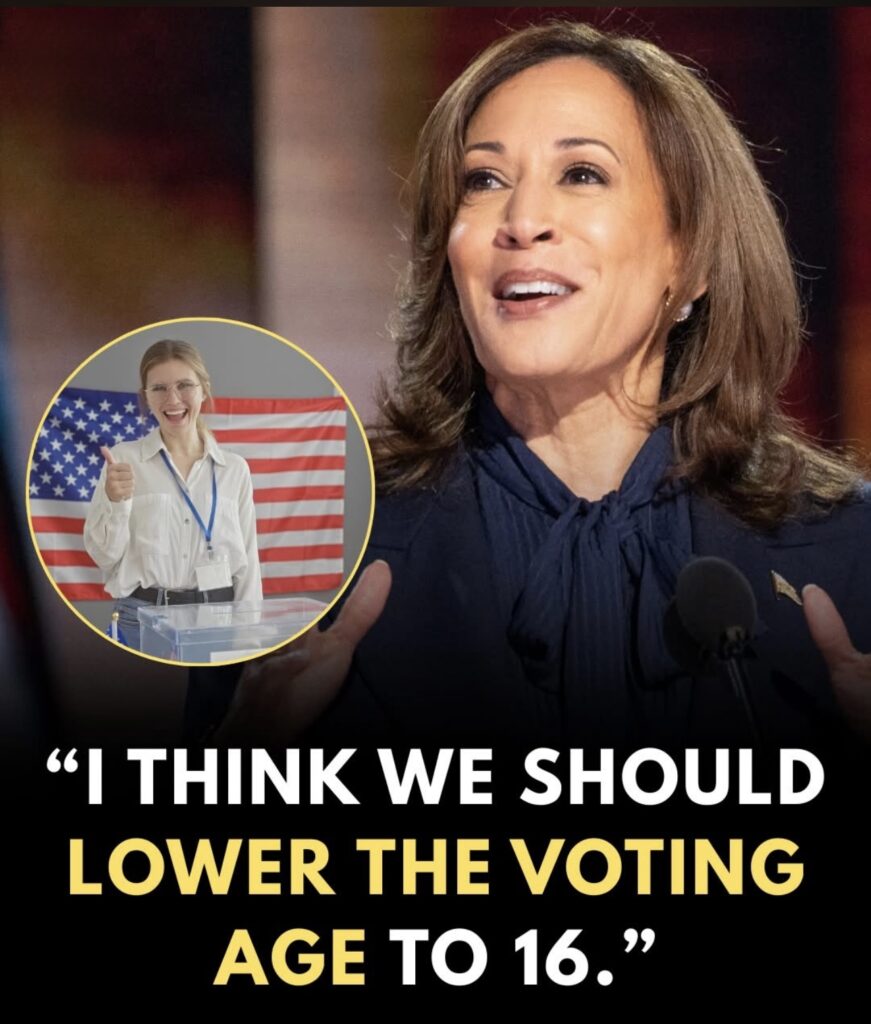
In late 2025, U.S. Vice President Kamala Harris reignited a long-running debate by saying the United States should consider lowering the voting age to 16. Her comments quickly gained attention online and across the media, especially as conversations about youth, climate change, and the economy continue to grow.
Harris explained that many government decisions—particularly those involving the environment, education, and long-term economic policy—will affect young people for decades. From her perspective, giving teenagers a voice earlier could help them feel more engaged in democracy and civic life.
What the Law Currently Says
Right now, the voting age in the U.S. is 18, set by the 26th Amendment to the Constitution. That means any nationwide change wouldn’t be simple. Lowering the voting age would require a constitutional amendment, a process that needs strong support from both Congress and the states. Harris did not announce any formal plan or timeline to make this happen.
Has This Been Tried Before?
While federal elections still require voters to be at least 18, some local governments have experimented with allowing 16- and 17-year-olds to vote in local or school-related elections. These examples are limited, but they are often referenced in discussions about expanding youth participation.
Mixed Reactions Across the Country
As expected, Harris’s statement drew strong reactions. Supporters believe younger voters deserve a say in shaping the future and argue that early involvement could build lifelong civic habits. Critics, on the other hand, raise concerns about maturity, political experience, and readiness.
It’s worth noting that claims about political advantage or party benefit are opinions, not proven facts. Harris herself framed the issue as one of participation and representation, not party politics.
Final Thoughts
For now, the voting age remains unchanged, and no immediate legal action is underway. Still, Harris’s comments show that the question of who gets to vote—and when—continues to evolve. Whether the idea gains broader support or fades away, it has clearly reopened an important national conversation about democracy and the next generation.